Thursday, October 15, 2015

Circle of Lies mystery novel released today: ‘Fat Louie’ character chats about Tom Kagan


By Mark Young
[The latest Tom Kagan novel, Circle of Lies will be released today in digital form through Amazon, Barnes & Noble, Kobo, iBooks, Smashwords, and IngramSparks. Hardcover and paperback formats to follow very soon.]

I caught up to our Circle of Lies character in California—Sergeant Art Crenshaw of the Santa Rosa Police Department’s Organized Crime and Intelligence Section (OCIS)…wow, that’s a mouthful. Anyway, Fat Louie—

CRENSHAW: “—hey, buddy, that’s not my name. If you can’t be civil in this interview—“

MARK: “—sorry, sergeant. That just slipped out. It won’t happen again.”

CRENSHAW: “Yeah, well, Tom Kagan came up to me later and apologized for calling me that behind my back. Just because I have aspirations to become a lieutenant, and my backside is a little…oh, just forget it. You can call me Art, Crenshaw, or sergeant, but just because you are the author doesn’t mean you can make a joke at my expense. After all, even supervisors have feelings.”

MARK: “Okay, okay, cool your jets, Artie. Like I said, it just slipped out.”

CRENSHAW: “Authors don’t make mistakes. They have to be very specific about the words they use. You just wanted to give readers a little laugh at my expense. Just because you have that power over us characters doesn’t mean you have to be mean.”

MARK: “Gee whiz, Artie, for a cop you have thin skin. Why can’t you be more like Kagan—tough, blunt, no nonsense.”

CRENSHAW: “You’d be sensitive too, Mark, if you had to try and supervise a cop like Tom. I mean, the guy’s a supervisor’s worst nightmare. Never know what he is going to do or say; and the trouble he gets into is enough to make me lose what little hair I still have. He attracts trouble like a magnet. I never know what he is up to. And that gives me nightmares."

MARK: “But he always lands on his feet.”

CRENSHAW: “Yeah, one of these days he’s going to bite the big one and I won’t be able to protect him. He’s a good cop—none better—but he is the reason our department keeps re-writing our rules of conduct. He’s broken just about every one of them getting the case done, and I wind up having ton of paperwork trying to save his butt.”

MARK: “Okay, what about his last case in Circle of Lies? Didn’t he do a fantastic job?”

Crenshaw gives me a quizzical look before answering.

CRENSHAW: “For an author, you are some kind of stupid. You want me to tell your readers everything Tom did in this novel. If I do that, no one’s going to want to read the story.”

MARK: “I didn’t mean to tell them everything Tom did. Just give them a hint of the trouble Tom faced."

Crenshaw shifted his ample behind in the chair as he thought about everything that had happened in the last few months.

CRENSHAW: “Well, I would say that Tom came as close to dying as he has in any police action since he joined the department thirty years ago. For a moment there, I thought they were going to kill him. And if he survived those killers, I feared he might end up in prison for the rest of his life. Now, that’s what I call ‘high stakes.’”

MARK: “How did this all start?”

CRENSHAW: “Hey, writer-man, you can tell them better than I. After all, you made this all up in that twisted head of yours. You tell them.”

MARK: “Hey, Artie. Drop the attitude or I just may write you out of the next novel.”

CRENSHAW: “See, that’s the attitude I was talking about. Now that is just down-right threatening. What? You going to get me killed in the next book?"

MARK: “Worse! Maybe I will make you in charge of all internal affairs cases. Everyone will treat you like you have the plague.”

CRENSHAW: “You think being a supervisor is much better. Always looking over everyone’s shoulder. Telling them all the things they can’t do. Being a supervisor is not a bed of roses. Always on the outside. Never being trusted. Never one of the guys.”

MARK: “Let me share a little secret with you, Artie. Kagan actually thinks you are an okay guy. He felt sorry for joining the other guys with that Fat Louie joke. He stopped calling you that after the Broken Allegiance novel."

CRENSHAW: “He told you he likes me? Are you on the up-and-up, or is this one of your author’s lies you just came up with.”

MARK: “No, I’m being straight with you. From my lips to God’s ears…it is the truth.”

Crenshaw gave me a look like he was trying to figure out whether I was telling the truth, or I was setting him up. I think being the author is like being an internal affairs investigator—no one trusts you.

CRENSHAW: “Okay. Here is how the case started. Tom got a call from a buddy of his up in Seattle about an armored-truck heist and a murder. The victim turned out to be Tom’s old partner at SRPD years ago. The guy was retired and he was working as a driver to make some extra coin. They shot him point-blank. Later they realize the shooting may have been about more than the robbery. It appeared to have been racially motivated. Jason—the dead guy—was black.”

MARK: “So how did Kagan get involved?”

CRENSHAW: “The Seattle cop gave Tom a lead in our neck of the woods. Once Kagan got his teeth into the case, there was no turning him back. I tried several times to give it to the FBI—but that son-of-a-gun keeps finding ways to land in the middle of the investigation. I warned him. The FBI warned him. Even the bad guys tried to get him to stop. But like I said, there was no reasoning with that guy. Tom was going to do it his way. Even taking his gun and badge away—which the chief did at one point—Tom continued to search for the bad guys until…well, I can’t tell your reader that or it would give the story away. Let’s just say Tom got into a heap of trouble. And he had an IA lieutenant looking for anyway to bring him down. Inside the department and outside, Kagan had enough problems that a reasonable man would have just walked away."

MARK: “But not Tom?

Crenshaw ran a hand over his thinning hair, a look of frustration painted on his face.

CRENSHAW: “Look, oh powerful one! I’ve played along here telling your readers about this novel since you have me over a barrel. But enough is enough. I’ve got a desk full of paper from Kagan’s latest fiasco. I’ve got to make sure that he doesn’t have to face off with that IA lieutenant again. So why don’t you run along and harass one of your other characters.”

 MARK: “I thought we were developing a little connection here.”

CRENSHAW: “Yeah, when pigs fly.” He started to rise, then sat back down. “Hey, I heard you are leaving town and heading back to Idaho, to the Nez Perce reservation. Does that mean you won’t be back for a while?” He shot me a look of hope.

MARK: “I’m going to drop in and check on Travis Mays and the gang up there. But I will be back soon, to monitor Tom and the rest of you. I don’t want to leave you guys to your own devices—without a little of my authoritarian supervision.” I gave him a big smile.

Disappointment rained on Crenshaw’s features like thunderclouds, dark and foreboding.

CRENSHAW: “Oh, joy.” He stood, looking down at me. “Next time, promote me to lieutenant and give Kagan another supervisor to harass. I’d like to sit the next one out on the sidelines.”

I just shook my head. Crenshaw needs a little R and R; particularly since I have an idea what kind of trouble Kagan is going to get into next time. Crenshaw will have his hands full. Oh well, an author has got to do what an author has got to do. And I have all kind of ideas that will give Kagan and the others a run for their money.


Saturday, July 12, 2014

Who Wins This War: You, Amazon or Hachette?

As this contract war—excuse me, negotiations— between Amazon and Hachette rolls on, what does this mean for you and me? For those of us who are merely readers and authors. Those of us who are not a part of the glittering heights of the publishing world. Many are characterizing this struggle as a battle between David and Goliath. I look at is as a struggle between two Goliaths.

Amazon fired another shot across the bow of the Hachette book publishing ship this week. While these two giants try to negotiate a contract—a heated contest which has drawn the interest of the entire publishing industry—Amazon suggested that both conglomerates give all Hachette authors 100% of the royalties from their digital sales until this dispute is resolved.

Hachette representatives called this suggestion financial “suicide.” Amazon counter that Hachette was full of “baloney,” claiming that Hachette’s $10 billion dollar annual revenue can easily afford this gesture.

Meanwhile, authors have been drawn into this fray.  The Washington Post reported that best-selling Hachette author Scott Turow—former president of the Authors Guild—characterized the offer as “little more than a publicity stunt.” Turow cautioned authors from accepting this blood money, although acknowledging that publishers brought this on themselves for not giving authors a fairer cut of the profits.

Bestselling author Doug Preston penned a letter of support for Hachette and asked authors to sign, claiming Amazon targeted Hachette authors to force the publisher to come to terms. Successful indie authors Joe Konrath, Barry Eisler, and Hugh C. Howey countered with a petition of their own directed toward readers, explaining the intent of Amazon and Hachette, and claiming Hachette—not Amazon—are the real culprits. Some 7,000 authors have signed this letter at last count. Preston’s letter has garnered close to 600 signatures, many of them top-selling writers in the business. (In the interest of full disclosure, I did sign the petition from Konrath et al.)

And so the war goes on.

Hachette was a co-defendant in the civil anti-trust suit, U.S. Department of Justice v. Apple Inc, that alleged Apple and five co-defendants entered into a conspiracy to raise eBook prices to consumers. The federal court slapped their hands, money was paid out, and now defendants like Hachette—free of the court ruling—must individually negotiate with Amazon and other eBooks retailers without the benefit of making a deal with Apple and other publishers that got them in hot water a few years ago.

Which brings us to today. The question I pose to you is who will win after the dust settles?

I imagine that Hachette and Amazon will enter into an agreement at some point that will benefit both parties. After all, it is a negotiation, right? And they are in the business to make money. Putting aside all the emotional terms being bantered back and forth—blood money, liberate, boycott, monopoly—it is all about the money and who stands to make the most.

Stating it simply, if Amazon wins, eBook prices will be lower and more consumers will save money on novels from bestselling authors. If Hachette wins, eBooks from their publishing house are expected to be kept high, and consumers will pay more for the same eBooks.

So what do readers and writers get out of this negotiation?

If you are one of Hachette’s bestselling authors and your publisher wins, you will continue to make less—percentage wise—than indie authors and the price of your novel will remain high. But who cares if you are an author like James Patterson (garnering $94 million last year) making big bucks. If youu are another Patterson—and Amazon wins—you might make more or less, depending upon whether more first-time readers are willing to  buy your novel at the lower price,  or Hachette changes the percentage you make on eBooks in your favor. It all depends if Hachette might be a little more reasonable and give their writers a bigger cut of the royalties on eBooks, but I would not hold my breath.

If you are a reader, you will most likely pay more for your eBooks if Hachette wins, and less for your eBooks if Amazon wins. As I see it, there might be a few variables that change this but the  bottom line—readers win if Amazon wins.

Lastly, there are writers like myself—indie authors whose largest chunk of income is derived from eBook sales. If Amazon wins, it will be like the status quo of the last few years. Legacy publishers will offer some books at a lower price (more competition for indie writers) but considerably higher than authors like myself. If Hachette wins, eBook prices will remain high with little or no discounts and we will sell more books.

As an indie author, I can’t seem to get too riled no matter who wins. In fact, if Hachette wins I think my odds of selling more books will rise. One of the key advantages of being an indie author is the ability to offer very competitive prices for your eBooks when legacy authors are stuck at the higher end. Wouldn’t you—the reader—be more tempted to buy five or six indie books and try them out for the same price of one Hachette’s bestselling author’s eBooks?

No matter who comes out ahead in this contract war, Amazon will continue to afford indie authors a viable market to sell their books in an environment that is structured for customer satisfaction. Amazon will continue to offer a very reasonable and fair royalty payment that is much higher than Hachette allows its writers. They will allow indie authors to release their novels as quickly as the author’s manuscripts are finished without having writers wait a year or two before publication. They will let the market decide who to buy, not a gatekeeper working for one of the legacy publishers.

Excuse me while I yawn as writers, Amazon & Hachette fired the next volley at each other. Some might think that I can not see the big picture. That I can't see where this will all lead. Give me a break! When this war is over, I will still be here, writing my next manuscript and reading a reasonably-priced novel from another indie author. Who knows, I might break down and buy an exorbitantly-priced novel from one of my favorite Hachette authors. In my world, when it comes down to it—nothing will have changed.

What about your world? Will it change anything?

Wednesday, April 16, 2014

Writer’s Dilemma—Finding And Keeping Readers

By Mark Young
“It was the best of times, it was the worst of times, it was the age of wisdom, it was the age of foolishness, it was the epoch of belief, it was the epoch of incredulity…”—Charles Dickens, Tale of Two Cities.

This classic opening line might well describe the current publishing world. It is a wonderful time to be a writer—getting published has never been easier unless you are trying to attract the attention of legacy publishers. And, at times, it seems almost daunting trying to get your novels recognized in a sea of new works that flood the market every day. Getting your book out there is getting easier. Attracting the attention of readers is not so easy. If fact, it might be describe as Mission Impossible.

Writers’ chances of getting a hefty number of new readers might seem less likely than winning the lottery or getting a majority of liberals to vote conservative. I gathered a few stats from the internet to illustrate what writers are up against. Did you know:


  • Besides feeding information to the CIA and NSA, Google gathers an assortment of stats including how many books are out there on the market. They claim there are at least 130 million books in the world at last count. This figure is rapidly climbing faster than Amazon’s share of the market.
  • And speaking of Amazon, this tight-lipped conglomerate has millions of books—print and eBook—just a click away from customers across the globe. Their lending library alone boasts over 475,000 books available to their Prime members. That’s a lot of competition.
  • Another source of interesting book facts comes from Bowkers, the official ISBN Agency for the U.S., who gives authors and publishers that little number—called the International Standard Book Number (ISBN). They also keep stats. According to them, the number of self-published titles in 2012 reached more than 391,000, a 59 percent increase over the previous year and a 422 percent increase over 2007.
  • Americans buy approximately five million books a day, and it is believed that 125 new titles are published every twenty-four hours. And then there is the rest of the globe.


So how do writers and readers connect amidst this tidal wave of competitors?

Since I have not hit the NYT's bestseller list, I am still trying to figure that one out myself. As a writer and reader, I try to use a little common sense and figure what works in my small part of the reading world. From that, maybe you and I can figure out the bigger picture that would help us to understand how to reach new readers.

Since the advent of eBooks, as a reader I have been able to sample more books than I would have ever encountered by regular visits to the library. I can do this at all hours and with greater ease than ever before. So what makes readers like me choose one book over another, one writer over all those others? We have only a certain amount of time to settle on new writers that we might like to read. And we don’t like to feel our time has been wasted. So, how do we make these choices?

First, word of mouth—whether it is face-to-face or online acquaintances—still remains one of the most
persuasive ways in my world to settle on the next book to read. I give a lot of credence to people whose opinion I respect. But I don’t generally buy a book solely on their opinions. Another way I zoom in on a book is to read a variety of blogs that I enjoy that focus on books, writers, and writing. An interesting interview with an author might persuade me to buy a particular book. Maybe. Then again, maybe I need more information. 

Personally, I like to sample the wares. One of Amazon’s most effective tools allows potential customers to read a sample of the book they are considering buying.  The Look Inside click and read function is a great way for readers to find out if the new author’s writing style interests them.

Another way to attract readers is the free or heavily-discounted promotions that are offered—particularly through Amazon’s Kindle Select program. These programs allow authors to promote their books to a larger audience than they might normally reach, particularly if it is pushed by Amazon’s secret matrix system that everyone is still trying to figure out. I am much more willing to take a chance on an unknown author if I can try out a free or heavily discounted book. More than once, after reading a novel I particularly enjoyed, I sought out and paid full price for other novels by the same author.

A method I use to gather writing samples is to subscribe to a number of free web sites—like Bookbub—that showcase free or discounted novels each day. I can scroll through the list and click on any that seem to strike my fancy, particularly if they fall in the free-to-$.99 range.

Now let me slip over and wear my writer’s hat for a moment. Once I have attracted a reader who seems to like my novels, how can I ensure that that reader will keep looking for my next release or buy earlier works?

There are three ways that come to mind, although I am sure there are others. First and foremost, keep writing good books. Secondly, use social media tools to stay connected to readers. And lastly, encourage others to review your books so that new readers will find out about your novels.

American author Fran Lebowitz is attributed with the quote: “You are only as good as your last haircut.” I’m not sure in which context she said this, but for most authors I would like to change this quote to say: You are only as good as your last novel. Writers need to strive to make their next novel even better. Readers deserve it, and I believe readers appreciate it. This goes into all aspects of making the novel, from the writing to the cover design and everything in between. Don’t get lazy. Do the best job you can and it will be reflected in the quality of your work. Readers will notice.

Before, during and after writing that novel, writers should consider developing and maintaining a web site, blogging, and using a variety of social media sites to stay in touch with readers. Develop email lists and consider using a good email service like Constant Contact to stay in touch with interested readers. Don’t badger them, but send regular updates so they can stay updated. Let them know of upcoming releases or promotions. They have tight budgets also, so let them know when they can save a few bucks on one of your novels.

Lastly, consistently and faithfully market your books. Seek out bloggers who might review your book, offer an interview, or allow you to provide a guest blog on their site. Look for websites that allow you to post your latest novel for their viewers. Explore the ever-growing online radio and pod casts for opportunities to reach new readers. Look for book club groups that you might be able to connect with either in person, on line (Skype, Face-to-Face Live, etc.), or by phone.

And do not give up. Take every day as it comes. Enjoy the little triumphs: a good review; the release of a new novel; a jump in sales on a particular day; and just the mere fact that you experience a good writing day. 

Enjoy the journey. And keep writing.

Readers and writer: How do you find new authors? What makes you stay in contact with that writer?

Tuesday, March 18, 2014

BROKEN ALLEGIANCE (A Tom Kagan Novel) has been unleashed

By Mark Young
Stop the presses! I completely forget to share my latest bit of news. I have a new novel out!

Can you believe I forget to tell you about this? I have been so busy working on my next novel, posting other authors’ new releases and other blog-related interviews—I completely forget to let you know.

I apologize.

Release of Broken Allegiance (A Tom Kagan Novel) may be known to those of you who pal around with me on other social media sites. However, I just realized that some of my reading friends might only cross paths here on Mark Young's Arresting Fiction blog. They may not know another of my mystery, suspense, police procedural novels has been let loose on the world.

Here is the down-and-dirty:

Police gang detective Tom Kagan sought justice for more than ten years, leaving him a broken man. His only reason for living—the woman he loves and the badge he swore to uphold. When a man is brutally killed in a vineyard on the outskirts of Santa Rosa, California, it sparks a series of events that test what’s left of Kagan’s resolve to protect and serve. 

Secrets from the past thwart Kagan’s efforts to unravel a series of killings sanctioned from within the walls of California’s highest security prison. From the lush vineyards of Sonoma County to the shores of beautiful Lake Tahoe, the detective must outsmart a killer who is moving in for one epic killing spree. 

Leaders of the notorious Nuestra Family prison gang are fighting for power, a struggle that spills out onto the streets of California. Kagan joins forces with Special Agent Hector Garcia, a feisty supervisor of the Special Services Unit for the California Department of Corrections; Diane Phillips, a beautiful and hard-charging prosecutor; and Mikio Sanchez, a former gang member marked for death. Through the eyes of cops and gangsters, readers are able to glimpse the seldom seen workings of the gangster underworld. 

Broken Allegiance is about treacherous lies, broken promises, and shattered lives—about life, death and a man’s honor.

Does this pique your interest? If so, you can find a copy of Broken Allegiance through Amazon’s Kindle Store here or in print through Createspace here.

Grab a copy. A sequel will be coming out right on its heels. Next time, I will be a little quicker letting you know when the novel is released.

Promise! Cross my heart and hope to… Huh, I think I’ll stop right there. After all, I do write crime novels.

Tuesday, January 28, 2014

A New Generation of Readers: Building A Reading BridgeThat Will Last A Lifetime

By Mark Young
“Dad, why do you want Katniss to marry Gale? I want her to choose Peeta.” My 12-year-old daughter is querying me on one of the hottest Young Adult (YA) trilogies—The Hunger Games by author Susanne Collins. These novels and the subsequent movies have captivated her imagination.

[Skip the next paragraph if you already know who Katniss Everdeen, Gale Hawthorn, and Peeta Mellark are. If you’re uncertain, please continue:]

In this dystopian thriller, these young people are trying to survive in the ruins of the nation of Panem (once known as North America) against a brutally repressive regime operated from the ruling Capital. Residents living in the twelve outlying districts must offer up two teenagers—one boy, one girl—each year to fight to the death in the Hunger Games. This tribute to those in power is so that all will remember the cost of rebellion that was squashed by the ruling government. This story focus around the main character—Katniss Everdeen, a teenager—who is emotionally drawn to two young males in her life as she struggles to stay alive. 

These two males are what my daughter is giving me the third degree about—Gale Hawthorn, Katness’s best friend and hunting partner; and Peeta Mellark, a baker’s son with a crush on the girl and who becomes her partner in the Hunger Game after they were reaped from District Twelve.

My daughter thinks that Peeta is Katniss’ best choice to become more than friends with—um, you know, that yucky love stuff. I disagree with her (because I am a trouble maker) and this difference of opinion has sparked a running dialogue for several months.

What has all this to do with building a reading bridge with the young? Everything! We must use whatever catches the younger person’s interest to help fan that literary flame in their lives.

This discussion between my daughter and I is just the tip of the literary iceberg. From here, we’ve launched into discussions about all of the characters: their strengths and weaknesses; conflict between protagonists and antagonist; and so forth. We moved on to talk about plot development; scenes of thematic importance; conflict resolution; and backstory. She may not use these specific terms to discuss the novel, but she has grown to understand the concepts, and throws around terms like backstory, demonstrating that she understands the rules of the writing game.

As a parent and author, this is sooo cool!

When she was a little girl, we would read stories to her—as we did to our older daughters—for bedtime and any other excuse we could come up with to read. She has progressed beyond this phase, slowly developing her own reading interests. As parent know, persuading children to read is not always easy. School work—with all its required reading—can put a damper on a child’s desire to read during free time. And then we must compete with the temptations of TV and technology—smart phones, tablets, video games, and other digital distractions. Reading a novel—whether print or eBook—can slip down on the list of things a young person chooses to do.

We found movies to be one way of developing a young person’s desire to read. I purchased a copy of The Hunger Games some time ago and tried to encourage my daughter to check it out. I could not get her interested. Then the movie was released. Our daughter enthusiastically agreed to see this PG-13 movie since she heard from others that it was a good movie (peer pressure was a positive thing in this instance). Once she saw the movie, she wanted to read the book. After reading the first novel she wanted to read the entire trilogy, saying the books are better than the movie.

Yes! She came to the realization—on her own—that a novel can take the reader deeply into many layers of a character which a movie just cannot reach.

Now, we want to continue to encourage her interest in
reading by searching out other YA novels that might strike her fancy. I just finished reading author Veronica Roth’s first novel, Divergent—first novel of another trilogy— which comes out as a movie in a couple of months. Great read! I am starting the second in the series, Insurgent, so that I’m positioned to discuss these novels with my daughter in case she becomes interested in reading them. After all, I don’t want to look like a dweeb (Urban dictionary: A dorky or nerdy person).

I am crossing my fingers. She does not want to finish Collin’s last novel, Mockingjay, because she does not want the story to end. She is already figuring out how to write a sequel series to The Hunger Games which clearly indicates to me that she is an author-in-training. (That’s a Super Bowl championship ‘Go Seattle’ yes!).

What could be better than having another author in the house?

Will this ploy—movies first, leading to the novel—work a second time? I hope so. If not, my wife and I will need to put our heads together and see what other strategies we can come up with. All this finagling is worth it if we can instill in her the desire to read for the rest of her life. What a gift that would be—to her and us.

This is what is working for us right now. Parents—what strategies have you successfully used in the past? Please share in case we need to come up with another game plan real quick.

Tuesday, December 24, 2013

MERRY CHRISTMAS & HAPPY NEW YEAR


But the angel said to them, “Do not be afraid; for behold, I bring you good news of great joy which will be for all the people; for today in the City of David there has been born for you a Savior, who is Christ the Lord. This will be a sign for you: you will find a baby wrapped in cloths and lying in a manger.” (Luke 2: 10-12)

Wednesday, October 2, 2013

Amazon's Kindle Matchbook Program

By Mark Young
Amazon is about to launch another program geared to tempt readers to buy more books—print and digital. Sort of a two-for-one deal! Past, present or future print-book purchases from Amazon will qualify readers to purchase the Kindle version for less than 50 percent its current list price/ These Kindle novels must be listed at a price point of $2.99 or less under this new deal.

Here is how I understand the program works. If you buy a print book form Amazon, you can opt to enter the Matchbook program and select the Kindle version at a greatly reduced price. This digital versions will range in price from absolutely free to a maxim cost $2.99. One caveat: This program will only include books from authors and publishers who have chosen to participate in this program.

Amazon has made this offer retroactive to include books purchased through their company going back as far as 1995 when they first opened their online bookstore. It will include books currently released and those released in the future.

On Amazon’s Kindle Matchbook FAQ page, the company tries to answer most of the questions that authors and publishers might have about the program.
One question that caught my attention had to do with how royalties would be calculated in this program. It appears the royalty is based upon the regular Digital List Price. 

For example, one of my Kindle novels is currently listed at $2.99, which allows me to earn 70 percent royalty. I have chosen to lower the digital price to .99-cents as a Promotional List Price. If I understand this formula correctly, I should expect to earn 70 percent of the Promotional List Price of .99-cents, rather than the normal 35 percent of books priced less than $2.99.(Amazon’s 70 percent royalty is only available for books price from $2.99-$9.99 in participating countries).

Looking at the broader picture, will this Kindle Matchbook program interest readers to buy two versions of the same book? I asked this question on the Kindleboards (KB) site to see what other authors and readers might be thinking. Now, keep in mind that most of these KB viewers are biased toward the Kindle version. At last count, 2,337 viewers clicked on my question to read what others had to say about this program, and 62 people jumped into the conversation to record their thoughts. Here are some of their comments:

One woman wrote: “I don’t have that many print books I’ve bought through Amazon. And I seldom buy or read print anymore. But I might use it to get eBook versions of a few books I bought for hubby through Amazon…and if I buy a gift paper book for someone, I might get the eBook version for myself. It would be neat if the reverse were also true—buy the full price eBook and receive a discount on the print book so that the total price is the same.”

Another viewer wrote: “I am looking forward to it because of past print books (pre-kindle) I bought and never read; maybe now that I can get them on the Kindle for a low price, I will read them! “

One man write back: “I can certainly understand Amazon’s intentions for this program—to drive eBook consumption and thereby drive Kindle sales—but it would be nice if they offered the reciprocal arrangement with the possibility of getting a print book at a discount once the eBook was purchased. I know a lot of people who don’t buy DTBs except as gifts or souvenirs. Amazon has sold millions of eBooks; I am sure they could boost the print sales if DTB’s were offered at a discount to purchasers of their eBook versions.

And lastly, this reader’s comments made me chuckle: “When is this program starting? I just ordered Nicholas Sparks new books for my MNL and would like it on Kindle so I wouldn’t have to wait for her to finish. She loves her Kindle but she has his whole collection so figured why stop now.”

I went ahead and started entering my novels onto the Matchbook program figuring it could not hurt to try it out. Who knows…maybe my novels will attract the attention of readers like the last person just quoted above who could not wait for MNL to finish reading the latest Nicholas Sparks novel. (Oh, in case you were wondering what  ‘MNL’ mean, I looked it up. Apparently it means ‘My New Love,’ at least in the context in which it was used. Either that or they were talking about flying to NML, which is the airport code for the Ninoy Aquino International Airport in Manila, Philippines.)

What are your thoughts about this new Amazon program?

Monday, July 29, 2013

Writing From Your Emotions: Old Dogs, Children, And Watermelon Wine

By Mark Young
Writing draws from a writer's emotions and experiences. I’m talking about that part of the brain that stores up memories and experiences like a sponge. That allows a writer to squeeze those memories onto the page and breathe life into a story. To weave words and memories together to create a world that is comprised of the fabric of our emotions and our life experiences.

I grabbed this title—Old Dogs, Children, and Watermelon Wine—from a country song written and recorded by songwriter/singer Tom T Hall to help illustrate a point. I remember when this song came out years ago. It touched me. The words and the way Hall sang and played this song made me feel like I was there beside him in that bar listening to an older “grey black” gentleman telling him about the meaning of life. It resonated with me, particularly two lines of the song that summed up love and innocence:

 Old dogs care about you even when you make mistakes,
God bless little children while they’re still too young to hate.


Now, I’ve never indulged in watermelon wine, but I love watermelon and I could imagine what watermelon wine might taste like. But, more importantly, I can feel and experience the other aspects of that song—a dog who loves you without question, without judgment, and children before they grow up in this fallen world and lose their ability to see everything through innocent eyes. I can close my eyes and picture that gentleman as “uninvited he sat down and opened up his mind” about life. I have been in places like that bar in Miami, and I can paint a picture in my mind just how the place would look.

As a writer, I could sit down and write a scene about this song based upon sketches and wisps of memory from my own life. That is how Hall reached me because he touched that part of my memory that is filled with similar experiences and emotions. This is what writers must do: They must make that connection between their readers’ world and their own.

Hall did this masterfully. If you have ever had the joy and frustration of owning a dog, you know what Hall is writing about. You could be the most cantankerous person on this planet, but if you fed and cared for a canine with any semblance of compassion and love, that dog will reciprocate with love one hundred fold even if you are an ornery old cuss. A dog will love you without question, without judgment. Hall used that emotional tug—a dog’s unquestioning love and a child's innocence—to grab at your heart and play you like a fiddle.

Writers do the same in a story by using experiences and memories to create a connection between writer and reader, much like playwrights creating a connection between the actor and the audience using the spoken word and stage props, or as Hall did with lyrics and music to guide usinto that bar. Certain words, certain stage props are used to carry the audience into another place where the playwright/author/song writer lets our minds do the rest of the work

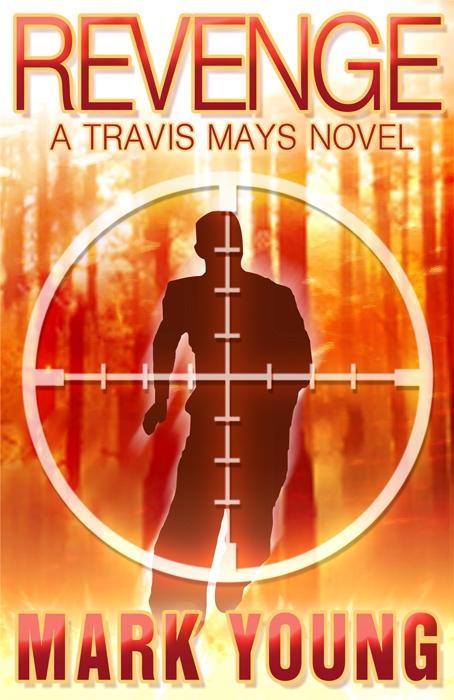
In my first published novel, Revenge (A Travis Mays Novel), I
take the reader up into the Idaho Mountains and along the Clearwater and Lochsa rivers. The story is about an ex-cop-turned-professor, trying to hide from the world in his cabin, who reluctantly agrees to help a Native American river guide find her missing brother. Much of the story centers along the two rivers, federal lands, and the Nez Perce reservation. It is a place I like to go to fly fish, and I have many memories—and frustrations—searching for the elusive steelhead along those waterways.

In my novel the land is as important as the crimes that the main character must investigate. I try to use my love of the mountains and rivers to create a world in which the reader sees and feels this place the way I do. Near the beginning of Revenge, Mays begins a journey down the river in which he sees something that his mind can’t seem to identify. He enjoys the river but he can’t shake that feeling that something or someone is out there in the forest watching him. The way he describes the river reflects his uneasiness:

Fingers of sunlight painted the river’s canvas with shades of green and sandy yellow until overhanging trees cast a foreboding net of darkness across the water. Like a dividing line between the seen and unseen worlds, sun-flecked waves became pools of mystic gloom beneath these leafy behemoths.

Throughout this novel I tried to use my love and appreciation of the river—and, hopefully, the reader’s—to create a bond between the reader and the character. I attempt to use the river as an allegory to what is happening in Mays’ life, and by the end of the novel these ties to the river should draw from the reader the same emotions and feelings coursing through Mays. I guess you will just have to read it to find out if I was successful.

Another great example is Ernest Hemingway's The Old Man and the Sea. Hemingway used the sea as much as a character within that novel as he did the old man, Santiago.

He looked across the sea and knew how alone he was now. But he could see the prisms in the deep dark water and the line stretching ahead and the strange undulation of the calm. The clouds were building up now for the trade wind and he looked ahead and
saw a flight of wild ducks etching themselves against the sky over the water, then blurring, then etching again and he knew no man was ever alone on the sea.

As I read that novel, I could feel Hemingway’s love and respect for the sea. I grew up near the Pacific Ocean, and those pounding coasts, bays, and inlets became my playground. As a young man, I ventured out onto the ocean currents searching for that trophy fish and felt the vastness of God’s creation and—by comparison—my own finite being. These experiences in my youth allowed me to make the crossover into Hemingway’s world. Maybe a reader has never been out in a little boat like Santiago, but they can use similar experiences to draw parallels in their mind to what this old fisherman must have felt as he battled nature.

This novel was Hemingway’s answer to all those critics who claimed he no longer could write, that he had somehow lost his edge to create another literary masterpiece. In The Old Man and the Sea, Hemingway drew from the deep reservoir of his emotions and experiences that he had stored up while living in Cuba and fishing the waters of the Caribbean and Atlantic Ocean. Hemingway's joy and reverence for nature comes alive in his stories.

Can you close your eyes and see the waters over which Santiago battled the great fish and the sharks? Can you smell the salty breeze and feel the parched lips of the fisherman as he struggle to stay alive? This novel was a culmination of all those experiences and emotions Hemingway soaked in and kept in his mental reservoir until he found the right time to put it down on paper.

What experiences and emotions have you used to allow your story to touch a reader’s life? What authors have you read that skillfully used their experiences and emotions to make the story come alive?

Sunday, June 9, 2013

Disneyland Through The Eyes Of A Writer

By Mark Young
Disneyland looms just ahead in our family’s vacation plans. In a few weeks we will travel to that happy place where everyone goes to have fun and to put the cares of the world far behind. Over the years I have loved taking my three daughters there as a family. Now, I have only one daughter at home and in a few years she will be spreading her own wings in preparation to leave the nest. I don’t want to think about that right now. I just want us to have fun. To live in the moment.

Maybe I will always be a kid at heart. Maybe that is why I became a novelist.

One thing that Disneyland does well is to create an environment in which everyone’s imagination can be unleashed. There is nothing in this amusement park to detract people from reliving their favorite childhood memories, to spend time in places that bring back those special moments. And to create new ones.

I would imagine for many folks picking out which part of the park is their favorite can be hard. Some of the memories I share are of characters and movies that I enjoyed as a child. Peter Pan and the ride through Neverland, fighting Captain Hook and never growing old. Mickey Mouse and his friends in Toontown. And later, Raiders of the Lost Ark, once again wondering if that giant rolling rock is going to crush you or if those spiders will sap you with poison this time. How about walking through the New Orleans quarter, listening to the jazz quartet amidst the aroma of Cajun cooking.

Hard to pick your favorite, huh?

As each of my daughters grew up, I think back about certain experiences unique to each child. One was sort of a daredevil. Disneyland is filled with these experiences—and brings back memories from yesteryear.

Recently, I asked my youngest daughter which ride was her favorite. She just
shrugged her shoulders and said, “I dunno.” I know how she feels—I can’t pick my favorite either.

On one of the days at the park, we will get a special pass and go early—before most of the park is opened for the general public. We get to stroll through there before the sun rises up and heats up the place hotter than the gunfight in the Pirates of the Caribbean ride. In those early morning hours, we get to jump on rides that have no lines. It is like Christmas and birthdays all rolled into one. The park is cool and unhurried, and we can race from ride to ride without any long waits.

Can you spell ‘Heaven’?

The Disneyland experience for me is akin to writing novels. Back when I began writing my first draft of Broken Allegiance (A Tom Kagan Novel) due out later this year, I felt that Disneyland feeling about writing my new novel—or reading a new book. Anything can happen. Pare it down to one word—magic. An opportunity to let your imagination run wild, to let words and scenes run through my mind in unending possibilities. It is like being in the park early in the morning before crowds moved in. Before an unkind reader leaves a less-than-flattering comment about the novel I just penned. Before my editor—whose advice and suggestions I truly appreciate—can point out those areas where I really missed the boat and my Great American Novel runs head on into reality. Before that first blush comes off the rose, that first excitement of writing that very first draft begins to fade.

That is part of the Disneyland experience.

When I sit down to write, I like to pick places I have been to before—if at all possible. Sometime, I need to do research for places I've never visited, like the city of  Baku, Azerbaijan on the Caspian Sea, and then try to imagine that place as it came alive in my novel,  FATAL eMPULSE (A Gerrit O’Rourke Novel). And I find myself often creating mind picture characters who resembles actors I have seen on the big screen—at least at the beginning. Before these characters begin to take on a life, looks and attitudes all of their own.

It is all about imagination.

Disneyland is laid out like a novel as it sparks one’s imagination. The ‘Happiest
Place on Earth’ is filled with all kinds of scenes—castles, rocket ships, mountains, and submarines. It is not bound by time. You can travel in the past, into the future, or in the here and now. You come across a variety of characters to fill these enchanting places. Some are good, some are evil and many fall somewhere in between.

Disneyland—like each novel—is divided into genres of entertainment—western, futuristic, medieval, and historical, to name but a few. You can choose which genre you would like to visit, or, you can sample them all. You are free to roam wherever you want until the place closes down. Morning turns to afternoon, and afternoon to dusk. As the hours slip by, so does the atmosphere of Disneyland. Places of mystery and intrigue during the day, seem to change as darkness sets, morphing into something entirely different at night. Lights become more intense, crowds seem to change, and at some point fatigue sets in as the hours wear you down.

It is like reaching a point in the novel, as you lie in bed, and start looking for a
bookmark to save your place for another day. You are too tired to continue, and your imagination needs to take break until tomorrow.

Which brings me to the question I asked my daughter: “What is your favorite ride?”

My favorite moment in Disneyland is not the rides or any of the entertainment. It is when you approach the front gate and see Mickey Mouse or one of his friends on the other side waving back. It is about the excitement I see in my family’s eyes—if those 'tween' girls who try to pretend that Disneyland is for kids, not almost teenagers like themselves. I enjoy that moment where we are about to cross over into the Land of Imagination where everything is possible. That little moment in time when everything about the day is still fresh and you feel anything is possible. That your imagination can go just about anywhere and unleash a whole new world.

Like when you pick up a new novel—particularly one written by one of your favorite authors—and you have no idea where this story is going to take you. You just know it is somewhere worth visiting. And you can’t wait to start the journey.

That is my favorite part of Disneyland. And I experience it every time I return with my family.

How about you? What is your favorite experience in the enchanted world of Disneyland or the enchanted world of books?

Saturday, May 25, 2013

FREE 3-Day Promo on Amazon: REVENGE (A Travis Mays Novel) Available through Wednesday, May 27, 2013

When a trained killer threatens ex-cop Travis Mays—and those Travis loves—he finds a skilled adversary and an unexpected fight.

After a high stakes gamble ends in personal tragedy, Travis walks away from years of training and a highly successful law enforcement career. Determined never to look back, he starts a new life and a new career, teaching criminology at the university and building a cabin in the idyllic Idaho Mountains. He hires a beautiful river guide, Jessie White Eagle from the Nez Perce tribe, to guide him safely down the Lochsa. The turbulence of the whitewater, however, is just the beginning of his troubles. Travis finds himself in the crosshairs of a killer—calling himself Creasy—bent on revenge.

This fast-paced thriller takes readers on a wild ride down Idaho’s whitewater rivers, along the historic Lolo Trails once tread by the Nez Perce nation, and onto the city streets of California. Tighten your helmet. This ride never stops until the last shot is fired and the final body falls.

Link for Free copy of REVENGE

Amazon

Excerpt from Chapter 1, REVENGE (A Travis Mays Novel)

Prologue

Santa Rosa, California, December 2004

Raindrops splattered the windshield as Travis Mays raised his binoculars. Come on. Come on. Where are you? He squinted, trying to catch a glimpse of any movement near the building through this infernal darkness.

Nothing.

Travis flicked the glove box open and snatched a bottle of antacids, tossing a handful into his mouth. Jaw muscles ached from gritting his teeth. These tablets did little to ease the burning inside. He raised the glasses once again.
Carlos shifted in the passenger’s seat. “She’s still inside, dude. Don’t get your shorts in a twist.”

Travis ignored his partner, straining to see through the windshield’s fogged-up glass. A two-story building loomed in the darkness fifty yards away. A black-grated fence circled the office complex. A droopy-eyed security guard—sheltered from pelting rain inside a lighted shack—sat twenty yards away, scanning all vehicles coming and going. No way to sneak inside to check on her safety.

He glanced at his watch. Ten o’clock.

Travis gripped his binoculars, searching for any signs of life in the darkened building. “Something’s wrong. I told Michelle to get out of there before everyone went home. Get in. Get the documents. Get out. This is taking way too long.”

 “Chill out. Maybe she’s just waiting until everyone leaves. Then she can grab and run.” Carlos chuckled. “Michelle, is it?  Sound like this is more than business. I saw you making eyes at her. She’s just a snitch, man. Business is business. Don’t let it get personal.”

“That snitch is risking everything. She’s putting it all on the line. We get paid to take these risks. Not her. She gets nothing out of this.”

“Okay, Okay. She’s a saint. What do you want from me?”

 “I want you to give her some respect. Michelle willingly came forward to tell us what she found out. No one forced her. And now, we’re about to nab one of the most ruthless traffickers we’ve ever hunted down—because of her bravery. Who knows how far this network reaches.” Travis lowered his voice. “She went back in there—knowing the danger—because I asked.”

Carlos raised his hands. “Whoa, man. Lighten up. To set the record straight, the suits higher up the totem pole sent her back in. Not you. They forced your hand.”

“I had a choice. I could’ve told them to take a hike.”

A car emerged from the parking garage beneath the office building. Two on board. He scanned the car as it slowed at the guard shack. Two burly men, no one else. “I’m telling you something’s not kosher.”

“Okay, maybe you’re right,” Carlos said. “What are we—“

Travis’ cell phone emitted several sharp beeps. He glanced at the digital screen and grimaced. His sergeant, Timothy Heard, supervisor for Santa Rosa Police Department’s criminal intelligence unit, was calling. “Yeah, sarge.”

“Need you to break away right now. We just received a call from the county. Their VCI dicks are working a homicide near Goat Rock. I need you and Carlos to eighty-seven with them.”

“We’re still waiting for the CI to come out. Once we connect, we’ll head out—”
“—I need you out there now. Your CI’s a no-show, right?” Heard barged ahead, not waiting for an answer. “Their victim is a female. Description matches your gal.”
“No way. She is still—”
“—I need you to get out there immediately, Travis. That’s an order.  The victim matches your snitch, that’s all you need to know. We may have some damage control issues.”

“It can’t ... what do you mean ‘damage control?”

“I mean if your informant turns up dead, we’ve got to cover ourselves.”

“You ordered me to send her back into that killer’s den. Damage control? You mean protect your sad —” He felt a hand squeeze his arm. Carlos leaned over, silently mouthing the words, “Be cool.”

Travis snapped the cell phone shut, jamming it into his pocket. “The SO found a body out at the coast. They want us to check it out.”

“The boss thinks the body might be our gal? And we’re just supposed to drive away? What if she’s still in there?”

Grimacing, Travis fired up the engine. “Orders are orders. But if this victim is Michelle ...” He let the words dangle, not wanting to give them life.

Only six hours ago he’d held her in his arms. They’d met in a motel room where he gave her final instructions. Get in, get out. Carlos stood guard outside. It had been eight exhilarating months since she breezed into his life, gave him a reason to get up in the morning. The way she teased and cajoled him into doing things he never tried before—ballroom dancing, or using a palate machine with her instead of going out for a beer with the guys. Michelle squeezed joy and excitement into every day they spent together. For once in his life, Travis began to think about the future, about spending his life with her.  It had been a long time since he thought about anything other than police work. She changed all that. Before they parted ways today, she reached up and drew him close, almost like a premonition. Jasmine perfume still lingered on his clothing. A few moments later he followed Michelle to her car, watching her taillights disappear into the bowels of the garage across the street. The last time.

Travis gunned the engine, cutting through the darkness. Rain and wind rocked the car as he slowed at the next intersection. He pressed the accelerator to the floor, activating emergency lights embedded in the grill of his car. It would be a long drive to the coast.

Bio.~Novelist Mark Young

Mark Young is an Amazon bestselling author. Both his Travis Mays and Gerrit O'Rourke novels reached the top 100 list, and his debut novel, Revenge, hit #1 for bestselling mystery/suspense police procedurals. Mark worked as a police officer and sergeant with the Santa Rosa Police Department in California for twenty-six years after working as an award-winning journalist. He is a Vietnam combat veteran, honored to have served with Fox 2/5, 1st Marine Division, and later with Headquarters company. He worked on several law enforcement task force operations, including the presidential Organized Crime and Drug Enforcement Task Force targeting major drug traffickers, and the federal Organized Crime Task Force charged with identifying and prosecuting prison gang leaders. He lives in the Pacific Northwest with his family. You can find out more about Mark Young at his web site at MarkYoungBooks.com